
1. Account

In this Section:


Find your Account Details

Figure 1. Navigation Bar

Click the cog icon in the top navigation bar (red).
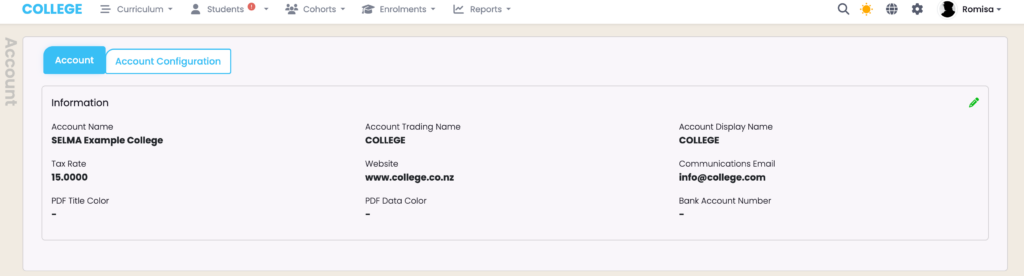
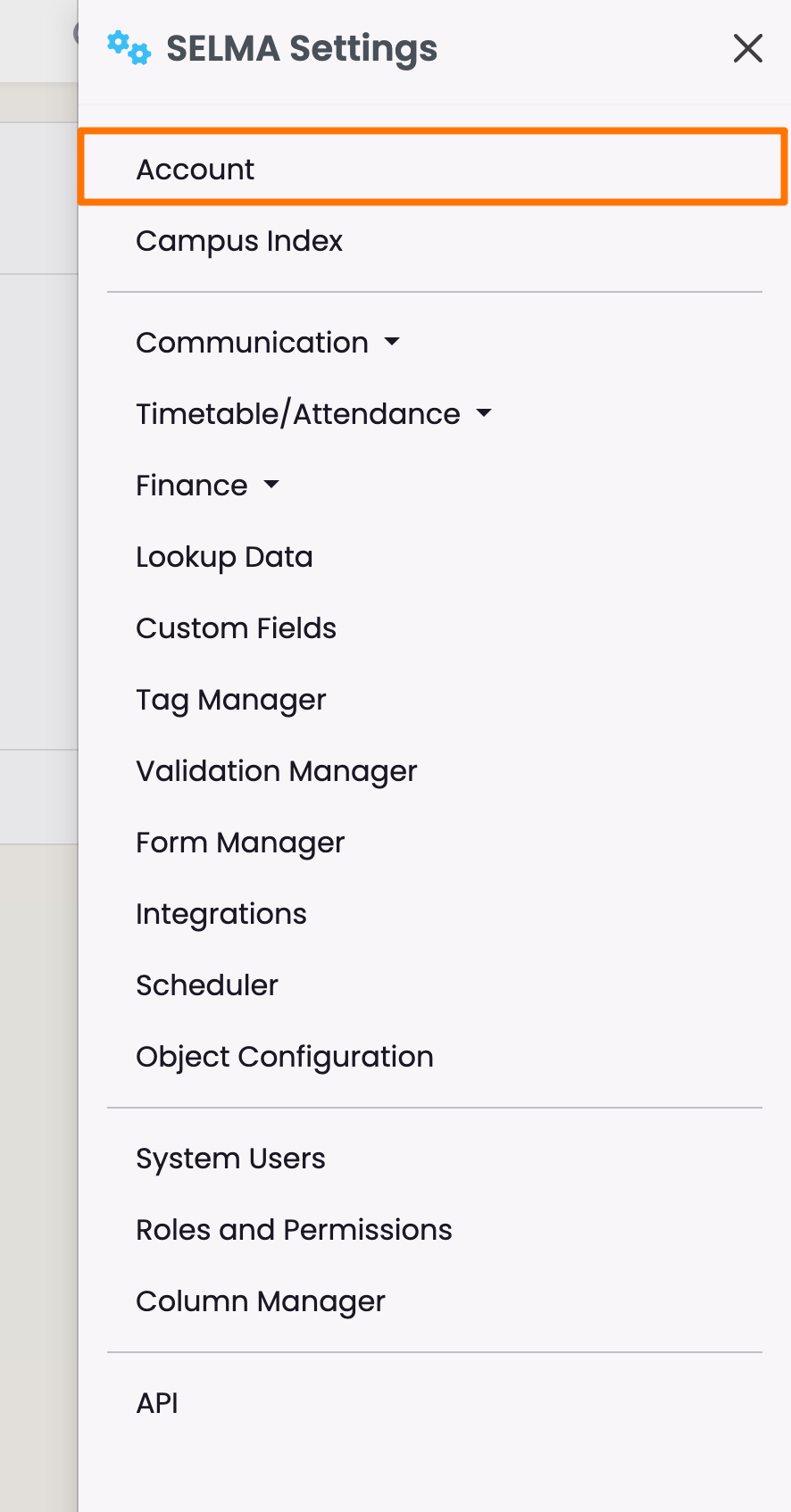
Figure 1ii. Settings Panel

Click “Account“.

Account Tab

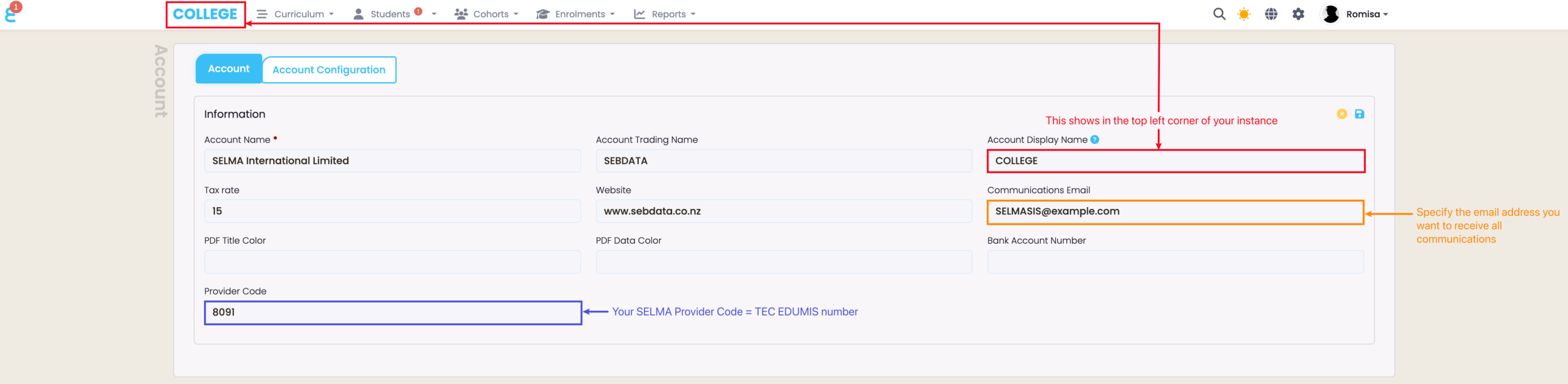
The Account tab is where you can make changes to the basic details set-up by SELMA.

Figure 2. Key Details

Set-up key parameters such as your Account Display Name, EDUMIS/Provider Code, and your email address for all SELMA communications, such as emails, texts and copies of form submissions (if the form module is enabled).

Account Configuration Tab

The Account Configuration Tab is where you should enable:

  • Awards
  • Orders
  • Quotes

Figure 3. Configuration Settings


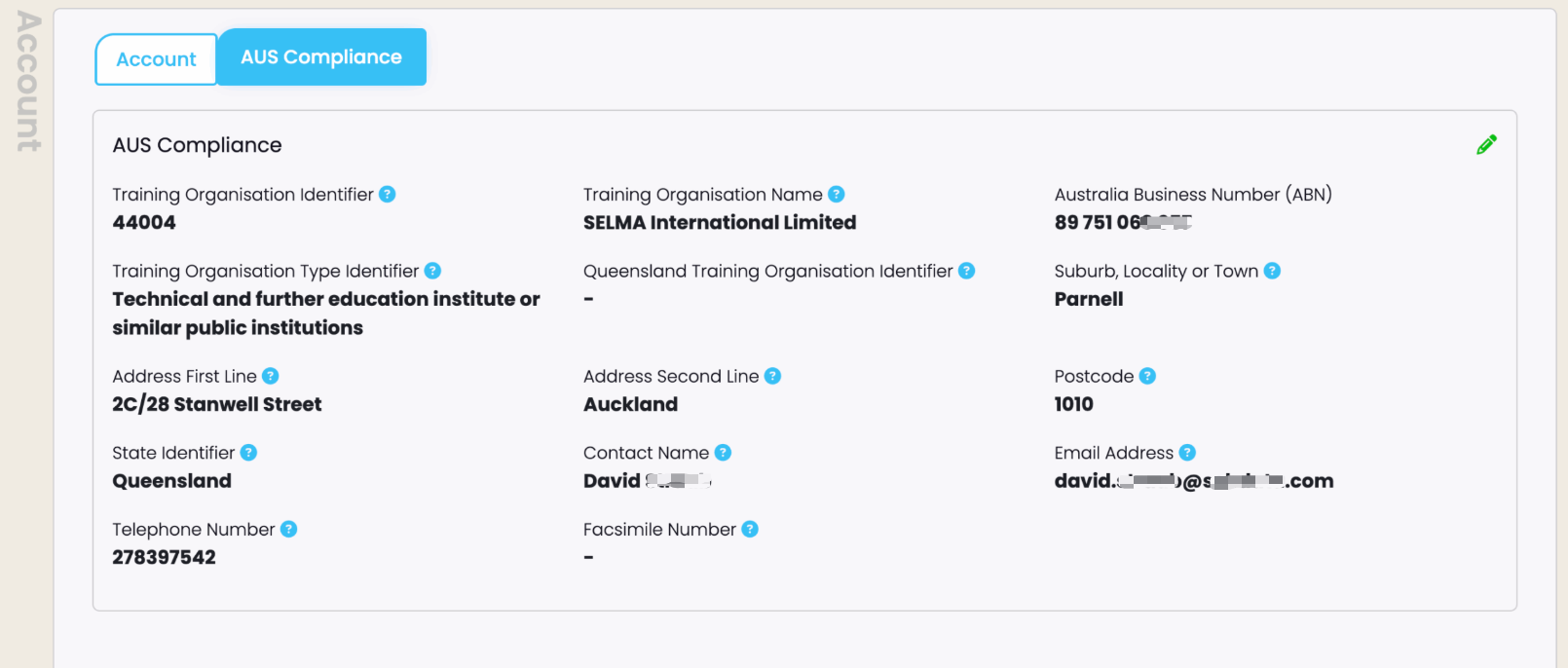
AUS Compliance Tab

Australian-based providers will see an additional tab under their Account: “AUS Compliance”.
Related Articles

3. Communication Templates

On this page: . Navigate to Settings (Cog) -> Communication Templates The most effective way of using comms in SELMA by creating templates. You can create templates for Emails, Email Attachments (PDF documents) and Text Messages. Templates are managed in sections on the comms grid where you can create, search, edit, preview or delete. To …

4. Custom Fields

To access Custom fields, navigate to Settings (Cog) -> Custom Fields You can personalise your SELMA instance by adding, editing and re-ordering Custom Fields and tabs for the following sections: To add a new Custom Field click on ‘ +Add ‘ Required information – Field Name, API Name (generated automatically based on the Field Name) …

7. Tag Manager

A tag manager in a student management system is a tool that allows administrators, teachers, and other staff to assign and manage tags (or labels) to students, courses, or other entities within the system. To access the Tag Manager in SELMA click on Settings -> Tag Manager From here tags can be managed for various …

6. Lookup Data

Navigate to Settings (Cog) -> Lookup Data This section allows you to manage lookup data in drop down lists available across multiple functions in SELMA, such as “Contact Types” or “Withdrawal Reasons”. The following lookup data tables are available for configuration: Items represented by a tool icon are system default values and cannot be deleted …